

Please note, this post may contain affiliate links. Visit Devine Fairytale’s Disclosure Policy for more details.
Saving for Disney can feel like a lot when you look at the full cost of the trip all at once. There is the resort, park tickets, transportation, food, and all of those extras that are easy to forget about until you start planning. The total may be bigger than you expected, but that doesn’t mean the trip is out of reach.
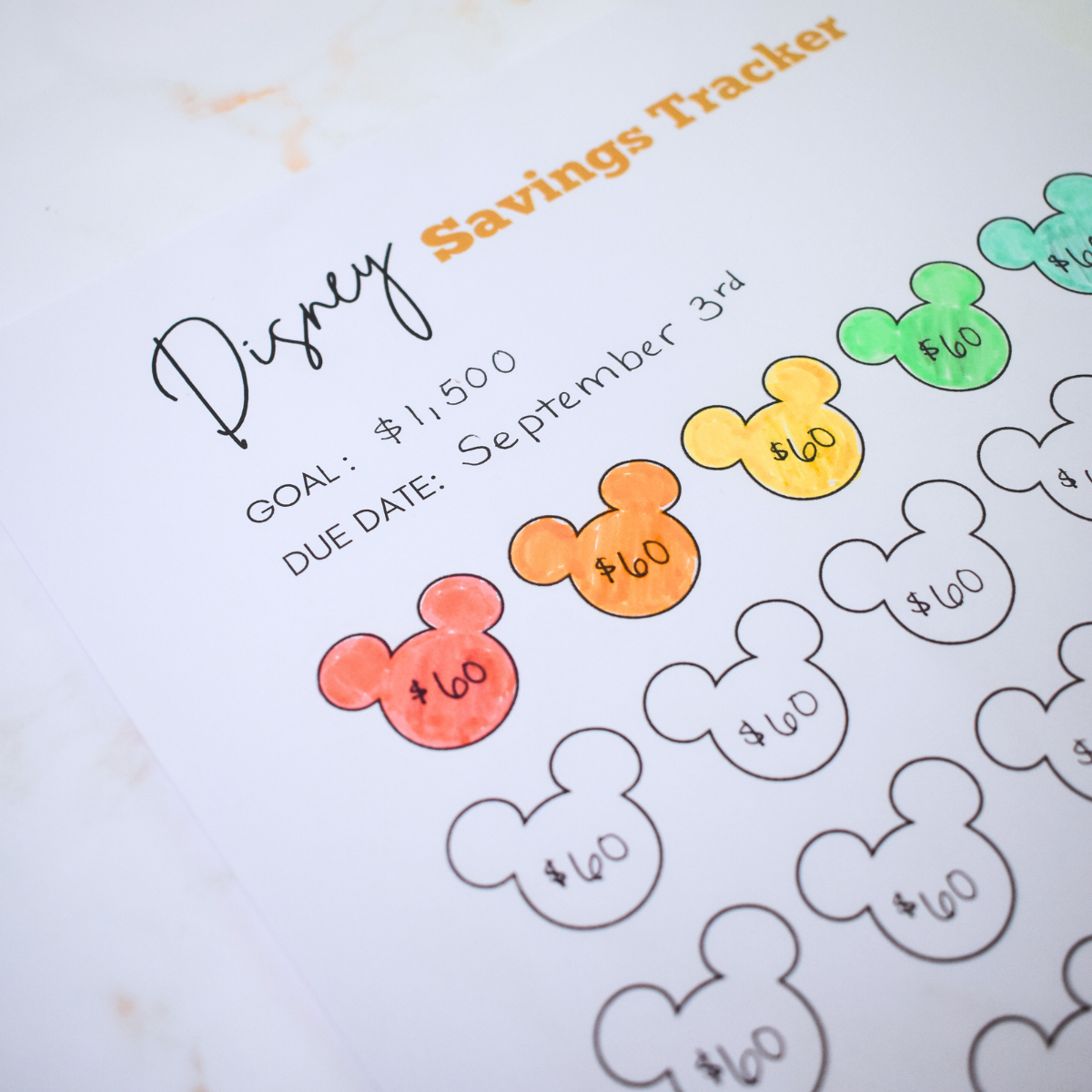
You also don’t need to have the entire vacation paid for the day you decide to go. Start with a realistic estimate, give yourself a deadline, and break the total into smaller goals. I created a free Disney savings tracker to make it easier to see your progress and stay focused on what you’re working toward.

Start With a Realistic Disney World Budget
Before deciding how much to save from each paycheck, get a better idea of what your actual trip may cost. Your Disney World budget should include more than the resort and park tickets. Those smaller expenses can add up quickly if you don’t plan for them from the beginning.
Estimate the Main Costs of Your Trip
These are the main expenses I recommend including in your first estimate:
- Resort or hotel: Compare the full price for your dates, including taxes and fees. If you are considering an off-site hotel, remember to include parking, resort fees, and transportation to the parks.
- Theme park tickets: Ticket prices depend on your dates and number of park days. Only add Park Hopper if your family plans to use it.
- Transportation: Include flights or gas, airport transportation, parking, and any stroller or ECV rental you may need.
- Food: Think about meals, snacks, groceries, tips, and any character dining or special meals you want to book.
- Paid park options: Add Lightning Lane passes, Memory Maker, MagicBand+, special events, tours, or other experiences you already know you want.
- Souvenirs and spending money: Set an amount before the trip instead of waiting until you are standing inside a Disney gift shop.
- Extra room in the budget: Leave a little space for an unexpected expense or something you decide you really want to add.
Your estimate doesn’t have to be exact. It simply needs to give your Disney saving plan a clear starting point.

Decide Which Parts of the Trip Matter Most
One of the easiest ways to overspend on Disney is to start adding every upgrade before deciding what matters to your family. Make a list of your priorities first, followed by the extras you would enjoy but could skip.
Maybe staying at a Disney Resort hotel is important to you, but you’re happy eating mostly quick-service meals. Another family may prefer a value resort so they can budget for character dining and Lightning Lane passes. There is no single right way to plan a Disney vacation.
Focus your budget on the experiences your family will notice and enjoy the most. You will have a much easier time cutting an upgrade that was never a priority in the first place.
Looking for the best travel essentials or Disney-inspired finds? I’ve rounded up all my favorites on Amazon, from park must-haves to magical extras. Take a peek and snag some goodies for your next vacation!
Work Backward From Your Payment Deadline
Once you have a trip estimate, subtract anything you have already saved. Divide the amount left by the number of months or paychecks before your payment deadline.
If you need to save $4,000 over 10 months, for example, your monthly goal would be $400. If $400 does not fit your budget, you now know something needs to change. You could move the trip dates, adjust the resort or number of nights, lower the amount planned for extras, or give yourself more time to save.
Seeing that smaller number makes saving for Disney feel much more manageable than staring at the full cost of the trip.
Walt Disney World vacation packages booked at least 31 days before arrival currently require a $200 deposit per reservation, with the remaining balance due 30 days before check-in. You can secure the package and make additional payments before the final due date. My Disney World vacation planning timeline can also help you match your savings goals with the other dates you need to know.
When you book your Disney vacation package (room plus park tickets) with me as your travel agent, you’ll pay a $200 deposit and the balance is due 30 days before you check in.
Use My Free Disney Savings Tracker
If a savings goal only lives in your head, it can be hard to tell how much progress you’re making. My free Disney savings tracker gives you a simple way to keep up with what you’ve saved and how much you still need.
You can use the tracker for the entire vacation or one specific goal, such as the resort balance, dining budget, or spending money. Keep it somewhere you will see it and update it whenever you move money into your Disney fund. Watching the total grow makes those smaller deposits feel much more meaningful.
Make Saving for Disney Part of Your Routine
You don’t need to overhaul your entire budget to start saving for Disney. Choose a few ideas that fit your life and repeat them consistently. Smaller deposits made regularly can make a bigger difference than waiting for one large amount of extra money.
Open a Separate Vacation Savings Account
This is one of the simplest ways to keep your Disney money from disappearing into everyday spending. A separate account also means you always know exactly how much you have saved for the trip.
If you plan to save for several months, you can compare high-yield savings accounts. Look for one without monthly fees and confirm that you can access the money when it is time to pay your vacation balance.
Schedule Automatic Transfers
Set up an automatic transfer for every payday, even if you need to start with a smaller amount. Once it’s scheduled, you don’t have to remember to move the money or decide whether to save it each week.
You could transfer a set amount from every paycheck or schedule one larger deposit each month. Check your Disney savings tracker regularly to see if you are still on pace for your goal.
Redirect a Few Regular Expenses
You don’t need to cut every little treat to afford a Disney trip. Look for one or two places where you can temporarily spend less without making yourself miserable. That may mean pausing a subscription you rarely use, ordering takeout one fewer time each week, or setting a lower limit for impulse purchases.
Move that money into your vacation account right away. If you leave it in checking, it’s very easy to spend it somewhere else without realizing it.
Give Extra Money a Plan
Tax refunds, work bonuses, cash gifts, rebates, and money from a side project can give your Disney fund a nice boost. Decide ahead of time what portion of unexpected money you would feel comfortable putting toward the trip. You can still use the rest for other goals or something fun now.
Sell Things You No Longer Use
A closet cleanout or home declutter can help you get rid of things you no longer need while adding to your vacation fund. Clothing, electronics, furniture, toys, and unused travel gear may be worth listing through a resale app or local marketplace.
Transfer the money after each sale instead of waiting until everything is gone. Those smaller amounts are more exciting when you can immediately add them to your Disney saving tracker.
Ready to keep your trip to Disney stress-free and organized? These free Theme Park Planning Pages are perfect for mapping out your days, keeping track of reservations, and making sure you don’t miss a single magical moment. Download them now!
Be Smart About Disney Gift Cards and Rewards
When you’re saving for Disney, gift cards and credit card rewards can help, but I wouldn’t make either one the entire plan. Gift cards aren’t as flexible as cash, and rewards are only helpful when you’re not paying interest to earn them.
Purchase Discounted Disney Gift Cards
Some warehouse clubs and retailers occasionally sell Disney gift cards for less than face value or allow eligible shoppers to use a store discount. The savings may look small on one gift card, but they can make a noticeable difference when you are paying for a larger vacation package or setting aside money for food and souvenirs.
DisneyGiftCard.com allows you to check balances, review transactions, and transfer funds between eligible cards. Keep the physical card after transferring its balance and save the card information somewhere secure.
I would only purchase gift cards for an amount you know you will use. Money in a savings account gives you more options if your dates or plans change.
Use Credit Card Rewards Responsibly
A rewards card may give you cash back, points, miles, or Disney Rewards Dollars on purchases you already make. Compare the rewards, annual fee, and redemption rules before deciding if a card, like the Disney Visa card, makes sense for you.
Paying the statement balance in full is important. Interest charges can quickly cancel out anything you earned, which means carrying a balance will not help your Disney saving goal.
How to Save for Disney World by Lowering the Trip Cost
Figuring out how to save for Disney World is about more than putting money into an account. Sometimes the best answer is lowering the cost of the trip itself without cutting the parts your family is most excited about.
Compare a Few Sets of Travel Dates
Disney prices change throughout the year, and moving your trip by a few days can affect resort and ticket costs. Compare the full package price for a few date options instead of assuming one month will always be cheaper.
I wouldn’t choose dates based on price alone. Weather, school schedules, park hours, and seasonal events may also matter to your family. Looking at the full picture can help you find the best balance.
Choose a Resort That Fits Your Plans
I love Disney Resort hotels, but the most expensive option isn’t automatically the best choice for every trip. A deluxe resort may make sense if you plan to enjoy the pool, restaurants, and resort amenities. A value resort may be a better fit if most of your time will be spent in the parks.
Compare the transportation, room space, location, and amenities you plan to use. Paying more for features your family doesn’t care about won’t make the vacation better.
Be Intentional With Your Park Days
More park days are not always better. A rest day can lower your ticket costs and give everyone time to enjoy the resort or Disney Springs. It can also make the park days you do have feel less rushed.
The price difference between ticket options may surprise you, though. Adding another day to a multi-day ticket could cost less than a separate paid experience you were considering. Price the trip both ways before deciding.
Watch for Disney Promotions
Disney releases vacation offers throughout the year, but the eligible dates, resorts, and room types vary. A promotion doesn’t automatically make something a better deal if you have to change the entire trip to use it.
When you book a Walt Disney World vacation package through me, my planning services are included. I also watch for new Disney offers and check whether they can be applied to my clients’ existing reservations. You can learn more about my Disney and Universal vacation planning services or request a quote when you are ready to compare options.

Keep Your Budget on Track at Disney World
Saving for the trip is only part of the plan. A few decisions made before you leave home can help you avoid spending more than expected once you arrive.
Set a Food Budget Before You Go
You don’t need to plan every snack months in advance, but it helps to look at menus and prices for the restaurants you’re considering. Decide which meals are priorities and where you’re happy choosing quick service instead.
I usually recommend a mix of table-service meals, quick-service restaurants, groceries, and snacks from home. Disney allows guests to bring outside food and nonalcoholic drinks into the theme parks within its current guidelines. Packing a few easy snacks and refillable water bottles can help you spend your food budget on the Disney treats and meals your family is excited about.
If you are staying at a Disney Resort hotel, you can also compare paying out of pocket with adding a Disney Dining Plan to your vacation package. The Dining Plan does not always cost less, but some families like having more of their food expenses paid before the trip. Look at the meals and snacks your family would realistically order before deciding which option works better for your budget.
Choose Paid Extras Before the Trip
Disney makes it very easy to keep adding to a vacation. Lightning Lane passes, Memory Maker, special-ticket events, character meals, tours, and other extras can change your total quickly.
Decide which options support your priorities and add those to the budget from the beginning. You don’t need every upgrade to have a great Disney trip, and none of them should be treated as an automatic purchase.
Give Everyone a Souvenir Budget
Disney gift shops are everywhere, which makes it easy to spend more than planned. Set a souvenir amount for each person before the trip. Older children can keep up with their own budget using a Disney gift card, while younger children may do better choosing one special item near the end of the vacation.
You can also buy a few Disney items before leaving home if you find something your family will enjoy for a better price. The goal isn’t to skip souvenirs completely. It’s to enjoy them without taking money away from meals or another part of the trip.
Pack the Essentials You Already Own
Bring ponchos, sunscreen, portable chargers, basic medicine, hats, sunglasses, and the other park supplies your family normally uses. Buying a second version of something you already own is not where I want you spending your Disney budget.
Use What Is Already Included
Guests staying at Disney Resort hotels can use Disney transportation to get to the theme parks for free. Pool time, Movies Under the Stars, and campfires can also add something fun to a non-park day without purchasing another ticket. Check your resort’s activity schedule because the options can vary.

Start Saving for Disney With a Realistic Plan
Saving for Disney doesn’t need to be complicated, and you don’t have to do it perfectly. Start with a realistic trip total, choose an amount to save from each paycheck, and track your progress. If the monthly number feels too high, adjust the trip or give yourself more time instead of forcing a budget that doesn’t work for your family.
Download the free Disney savings tracker to get started. If you would like help comparing resorts, dates, ticket options, and current offers, I would love to help you plan a Walt Disney World vacation that fits your priorities and budget.


